Appearance
GPSEA (Genotype-Phenotype Statistical Evaluation of Associations)
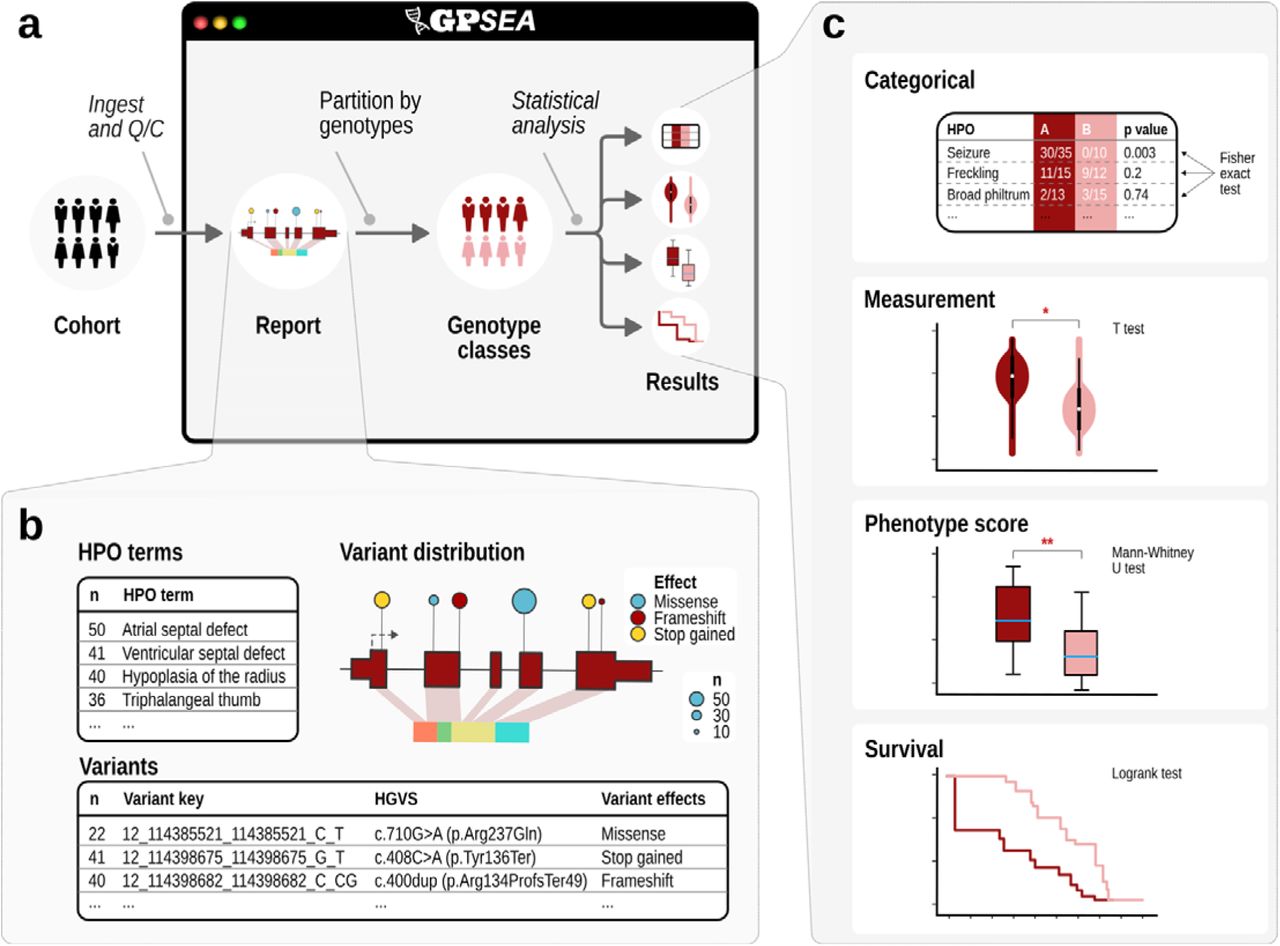
There are a huge number of clinical manifestations of human disease, and even individuals with the same clinical diagnosis may present with different combinations of phenotypic abnormalities, ages of onset of these abnormalities, and degrees of clinical severity. A key question for genomic precision medicine is how specific genetic variants influence clinical phenotype. The correlation between genotype (the type of variant or variants present at a given location) and phenotype (presence or absence of medically relevant observable traits) is defined as an above-chance probability of an association between the two, an association termed genotype-phenotype correlation (GPC). GPSEA leverages case-level phenopackets, characterizing an individual person or biosample and linking the individual to detailed phenotypic descriptions, genetic information, diagnoses, and treatments. GPSEA automates the process of visualizing and performing GPC analysis (GA4GH Phenopacket-Driven Characterization of Genotype-Phenotype Correlations in Mendelian Disorders).